Miniature Migrations
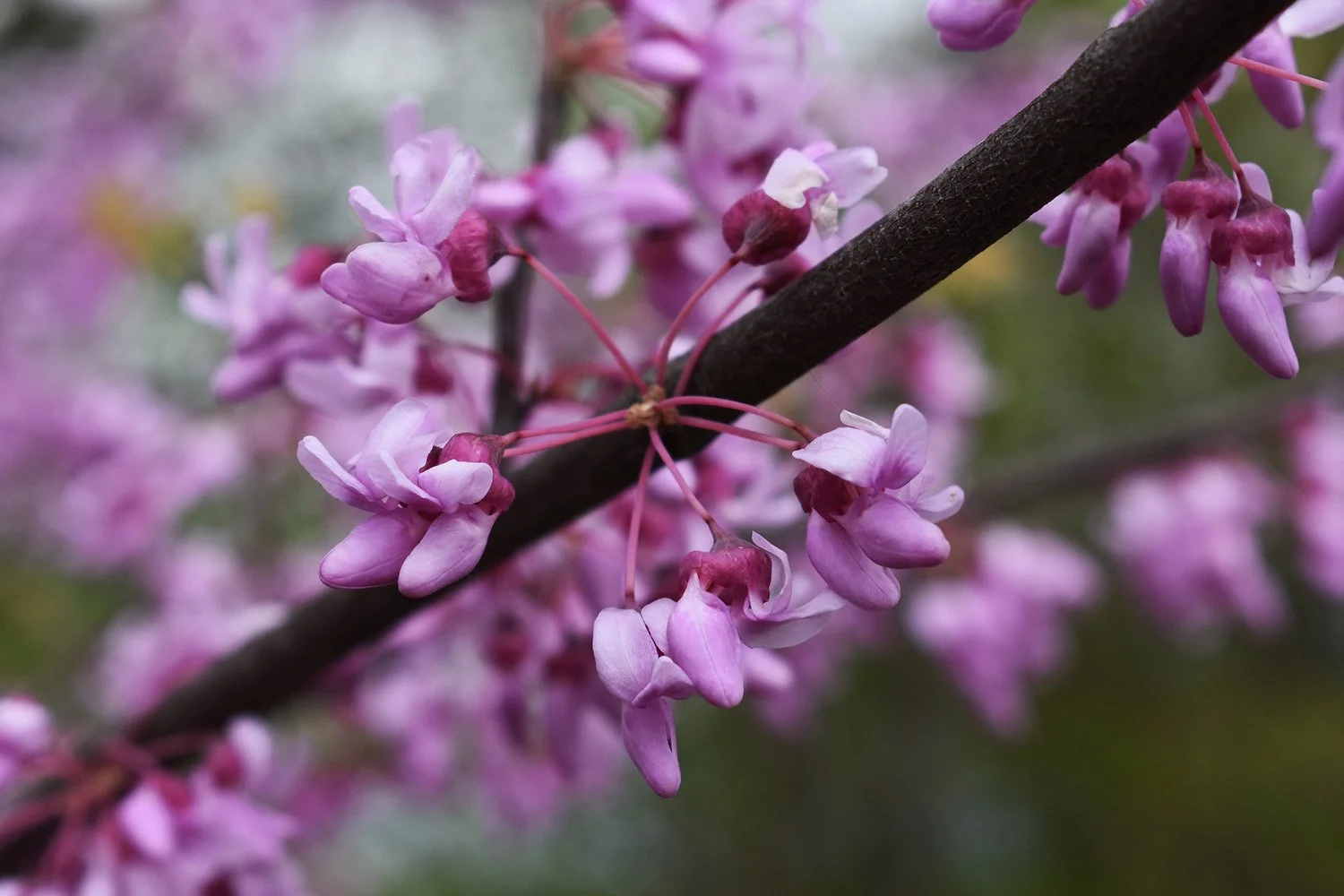
“Redbud (Cercis canadensis)”
Anna Weyers/USFWS
Miniature Migrations
One, two, three, I usher each cold, drowsy bee
from dirty clothes piles in the basement
to the front door’s barren flower pot.
But one warm day, a bee buzz, buzz, buzzes against
the laundry room light—awake and ready.
My husband shepherds that one. He’s taller.
Redbud branches bob in the breeze,
supporting fistfuls of pink blossoms perched like birds,
their tail feathers of seed pods twitching, though they will not fly,
only fall to the rain-softened earth where they will grow
skinny little stems offering giant green hearts.
On the bathtub ledge, we have a jumping spider named Frank.
(Frank must be, in fact, many jumping spiders over the years,
a family of Franks. Each Frank is held in the highest regard.)
Now there is also a Kitchen Frank.
Kitchen Frank knows no bounds.
The dish rack first, rehomed to the opposite counter next,
then, surprise! A boop on Lucas’s nose
from the launchpad of the light fixture.
A sitcom-worthy holler: Fraaannnkkkk!!!

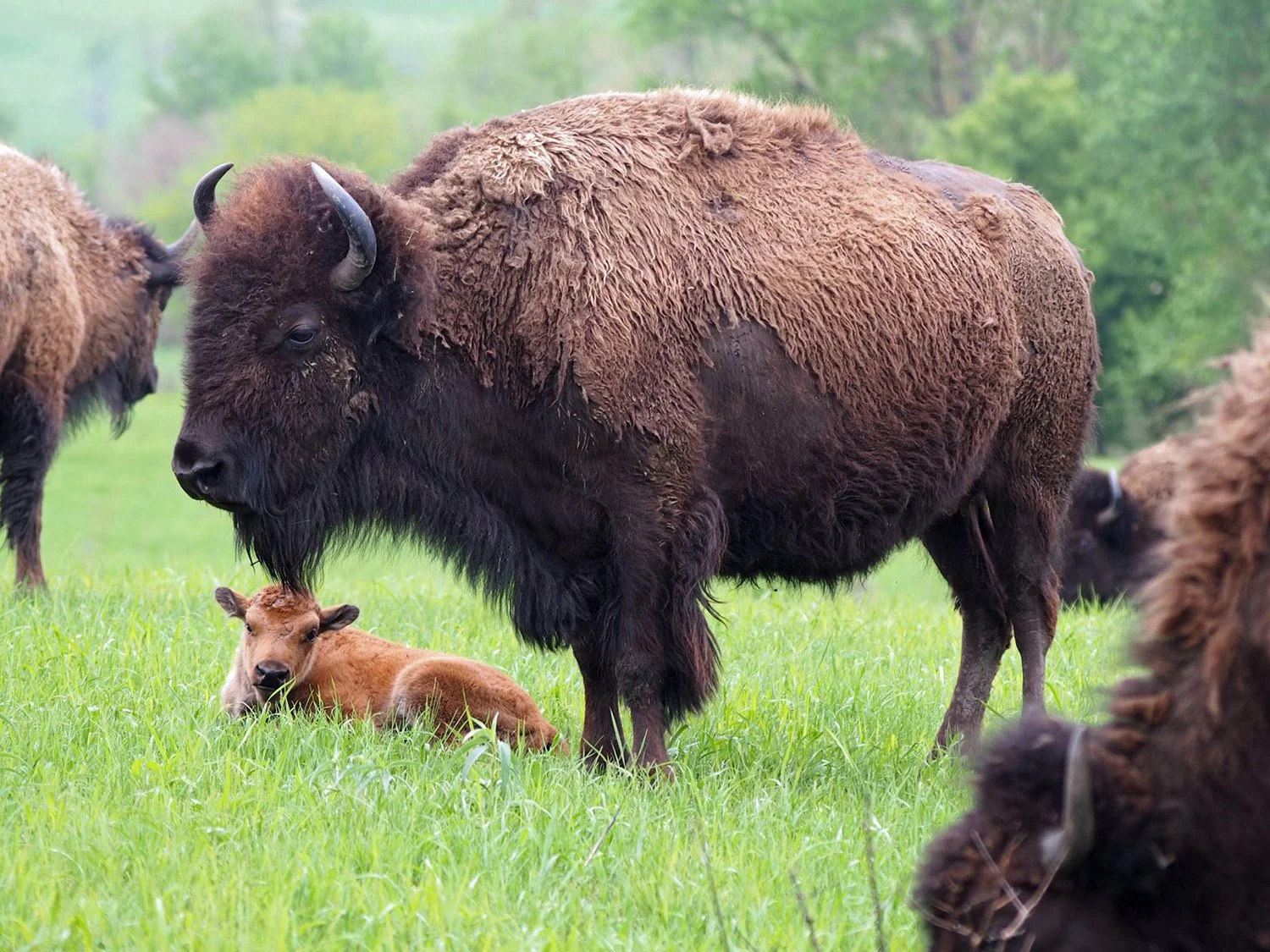
“Bison Calf” (Neil Smith Wildlife Refuge, Iowa)
Karen Viste-Sparkman/USFWS
Plow Our Collective Grave or Resurrect Our Future
It’s possible that the more notes I take on a book, the harder it is to write the accompanying newsletter review, and I think I set a record with Sea of Grass by Dave Hage and Josephine Marcotty. These two Minnesotan journalists had my attention from the very first paragraph.
If you live in Iowa, Minnesota, South Dakota, Kansas, or Montana, reading this book will help you understand the environmental conditions of your state and what people are trying to do about it (and what/who stands in their way). If you live in the rest of the Midwest, or frankly anywhere else, I still recommend this book as high priority reading because we are all connected through our waterways and our food system, and this is an issue that should be a priority for all of us as constituents and consumers. (Plus you might find universal strategies for navigating the issues of your area.)
This book covers a lot, and all of it worthwhile, but there were two things that shocked me the most. I thought I knew enough, I suppose, to gauge the urgency of these two issues—water pollution and prairie restoration. I did not.
We have a lot of corn and soybeans in my corridor of the Midwest. When I was a kid, it was taken for granted that we’d be driving through corn fields to get anywhere outside the city, and it was monotonous and yawn-inducing, but the sky was big and that was something. There were also bugs that splattered the windshield like rain. No longer. And now, knowing more about what the prairie does for us, it’s hard not to look at those corn fields and clean windshields and see our collective grave. But I didn’t realize how fast we were digging it.
“The eastern tallgrass prairie, which once covered great swaths of Illinois, Iowa, Minnesota, and eastern Kansas, is 99 percent gone—lost to the plow in the nineteenth century. The western shortgrass prairie, in states such as South Dakota, Montana, and western Kansas, is disappearing at a rate of one million acres a year as farmers plow up grass to plant corn, wheat, and soybeans. That’s an area the size of Connecticut disappearing every three and a half years. With little notice, these grasslands are vanishing faster than the Amazon rainforest.” (xv)
—Dave Hage and Josephine Marcotty, Sea of Grass
Why does this matter? Because our soil and our native plants are champs at sequestering carbon dioxide, and when we dig them up, we release it. Hage and Marcotty also tell us, “Many ecologists now argue that, among all the world’s tools to buffer greenhouse gases, simply keeping grasslands intact is one of the simplest and most powerful.” (202)
Of course this is an issue entangled with economics and politics. Seeing the different perspectives and how people found middle ground was fascinating. I was still hooked by the end of this book, when I read the last chapter, “Tatanka,” about bison and the role ranchers, like Dan O’Brien of Wild Idea, play in saving the prairie.
This book starts out with some rough facts that we have to face, and while it makes it clear it’s not an easy path forward, I closed the cover feeling motivated. It was a great reminder that there are smart and caring people out there who are doing the work the best they can—and they need our support.
What have you learned about the environment in your area that surprised you? What did you find the most inspiring in Sea of Grass?
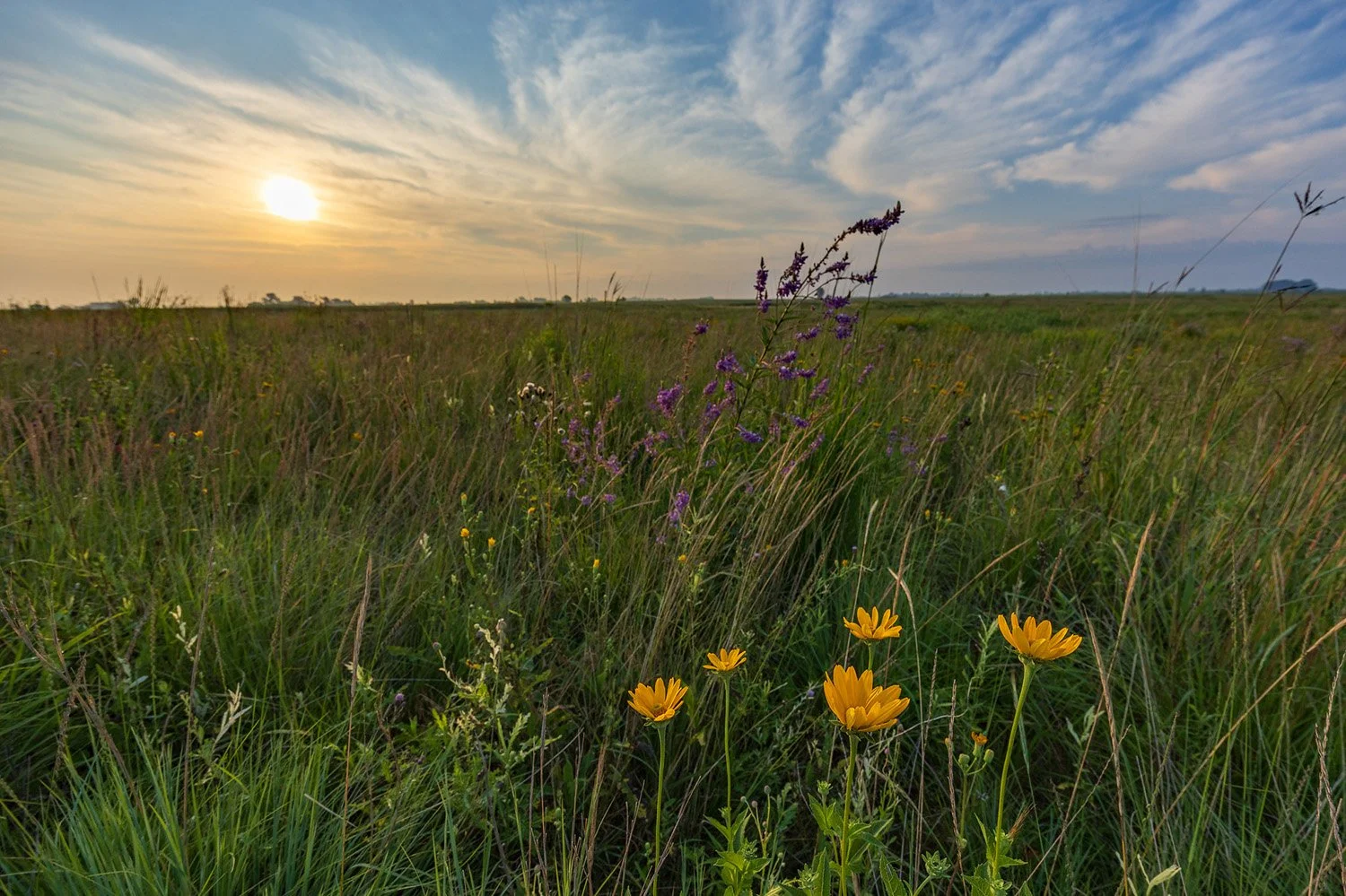
“Sunrise over a blooming prairie”
Mike Budd/USFWS
May’s Book: Clouds
For May, we’re reading The Cloudspotter’s Guide: The Science, History, and Culture of Clouds by Gavin Pretor-Pinney, the founder of the Cloud Appreciation Society. But if you’d like something light on text, heavy on the beautiful illustrations, I’ll also be reading Cloudspotting for Beginners by Gavin Pretor-Pinney and William Grill. And if you really want to cloud-nerd out, may I recommend A Cloud a Day? This book is sky eye-candy, filled with photos of clouds from members of the Cloud Appreciation Society. Maybe you’ll enjoy a cloud at bedtime. I do.
Something to Try
Look up during the month of May. What do you see in the sky? In the trees? Write it down in a journal and/or drop me a line in the comments.

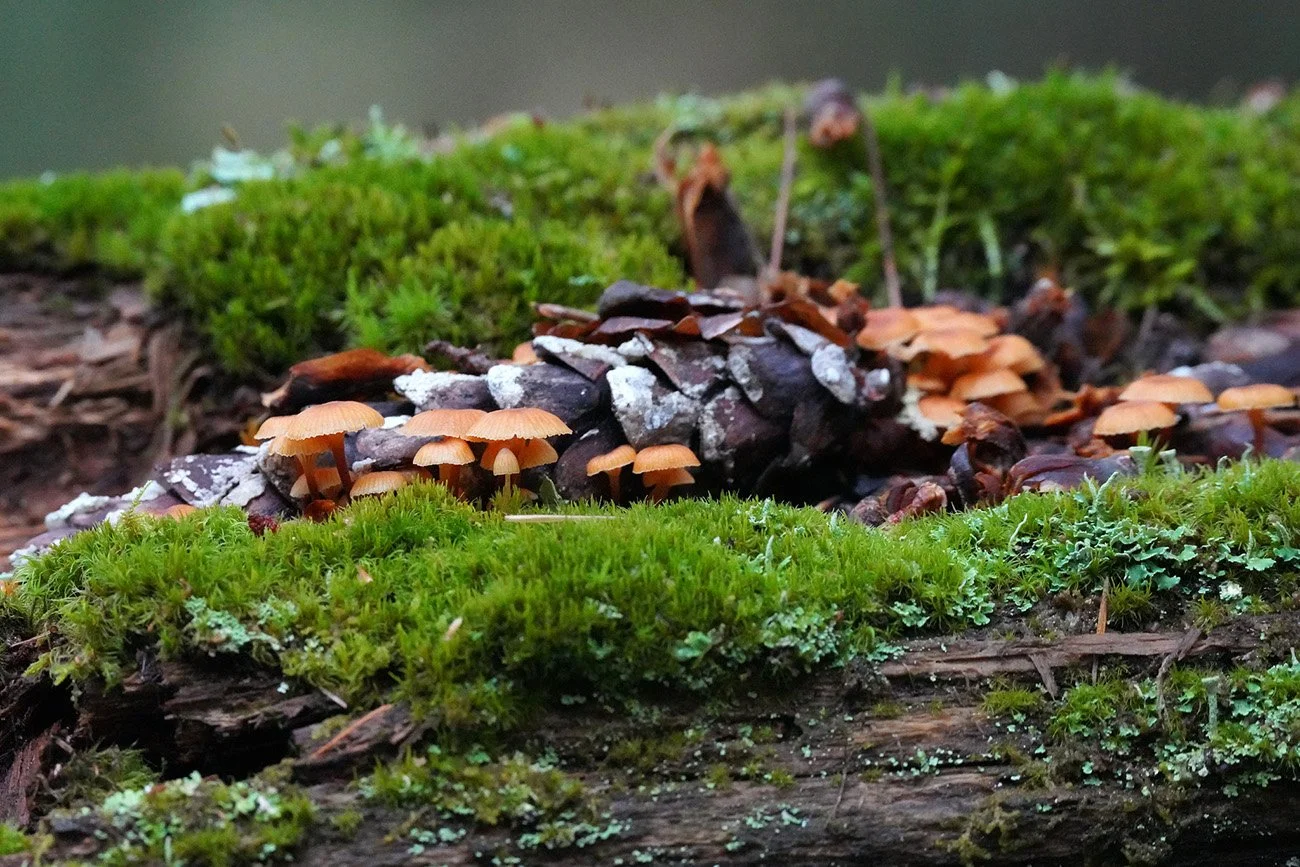
“Mushrooms”
Courtney Celley/USFWS
Growing Hope
This is a new segment that’s a mashup idea after reading How to Fall in Love with the Future by Rob Hopkins (imagining the future we want) and the delightful Syme’s Letter Writer by Rachel Syme (she recommends lists of things as an option when writing to friends). Every month, I’m going to sign off with five hopeful things, and I’d love it if you joined me, either in your own notes or commenting on the blog.
1. Pushback
In a ludicrous move, the Senate voted to remove protections from the Boundary Waters and open it to copper sulfide mining—which is terrible news—but the good news? So many people are very unhappy about this. If all else fails (which I don’t think it will), I anticipate a blockade of canoes, fishing poles, and unstaked tents, which will be impossible to bulldoze out of the way because they’ll blow right back again as surely as dandelion fluff. (You can learn more about this issue at Save the Boundary Waters.)
2. Popularity
The Natural Resources Foundation of Wisconsin does activities all over the state. They let you know that trips go fast (great news for nature, tricky for individuals), so I made sure to sign Lucas and I up for our first choice right when registration opened. I’ll report back in the May newsletter! (There are still some open trips if you’re interested: NRF Open Field Trips)
3. Communal Effort
The Less Lawn, More Life challenge with Robin Wall Kimmerer! (RWK is the author of our past read, The Serviceberry, as well as Braiding Sweetgrass and others.) Want to see your yard thrive, but aren’t sure where to start? This free program gives you a scorecard for your yard, 12 weeks of steps and tips, and more. Robin Wall Kimmerer kicks things off with a webinar on Thursday, May 7 at 6 pm central. (Sign up for the challenge to access.)
4. Front Row Seat
I have a friend in the neighborhood who set up her yard in the fall with patches for native plants. I can’t wait to see her progress!!
5. Hope Can Grow on Trees
This spring we realized our wild strawberries had spread. So did our irises and ferns. One of our plum trees looks like it doubled in size from last spring and I recently saw a cardinal in the other plum, doing his best to look majestic among the white cloud of blossoms. All that yard back there used to be grass, a few sad, unbearing fruit trees, and a dilapidated garage. Right outside my window is the evidence—the work of yesterday can make tomorrow thrive.

Credits
All doodles by Leigh Anne Gray.
All photographs in this edition of the newsletter are by UWFWS Midwest and in the public domain.
Quotations for the book review are from the 2025 hardcover edition of Sea of Grass: The Conquest, Ruin, and Redemption of Nature on the American Prairie by Dave Hage and Josephine Marcotty, published by Random House.