Whales, Women, and Loose Threads
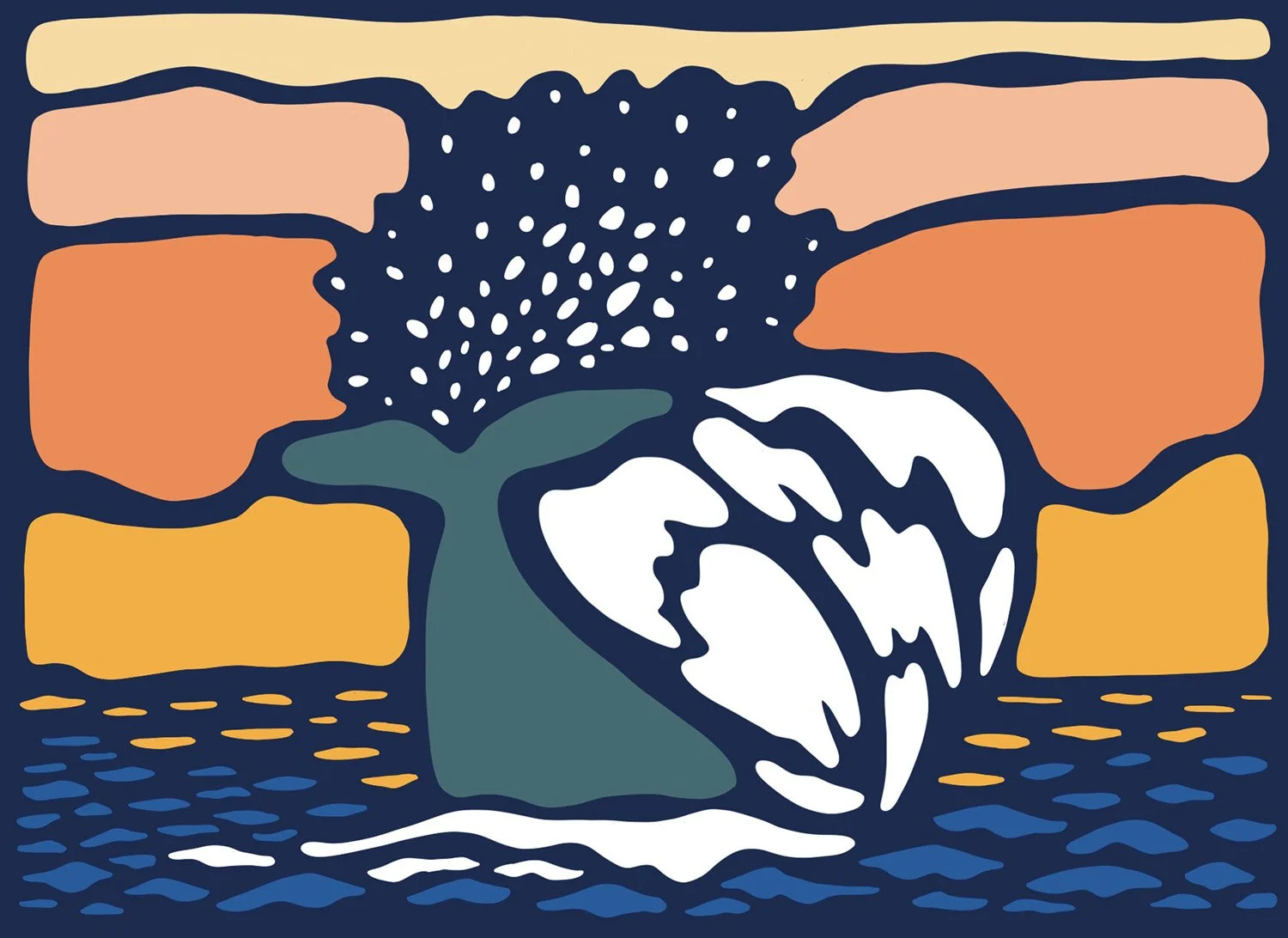
Loose Threads
I wanted to say something about women and whales.
What was it?
Hmm.
Did you know they go through menopause?
Some whales, that is. You knew women go through menopause.
I knew too. (Abstractly.) Until recently, we didn’t know much
beyond that singular fact. Thanks again, patriarchy.
Apologies to our mothers
and their mothers
and their mothers —
I feel like neither woman nor whale.
(Does a whale ever feel like not a whale?
Can you feel out-of-body under the pressure of the sea?)
I feel a kinship instead
with the crap caught
in the dryer filter. An unassociated accumulation
of leaf bits and bug bits and clothes lint
and loose thread, detached from
where it thought it belonged.
Some of it falls in the dryer guts
with a coin too heavy to blow away.
I bet that coin wonders why the hell
it’s all of a sudden trapped
in the moist, loud HOT
every time I run the
towels, delicates, sheets.
I bet it wonders
when it will become
unstuck
and just what
that will mean.
I wanted to say something about women and whales,
particularly their connective powers—
their adaptable communication,
their capacity for love
deeper than the ocean.
But I digressed,
hope you’ll forgive me—
these days I’m just a bit
of a preheated mess.
Of Women and Whales
How “Loose Threads” Caught On Paper
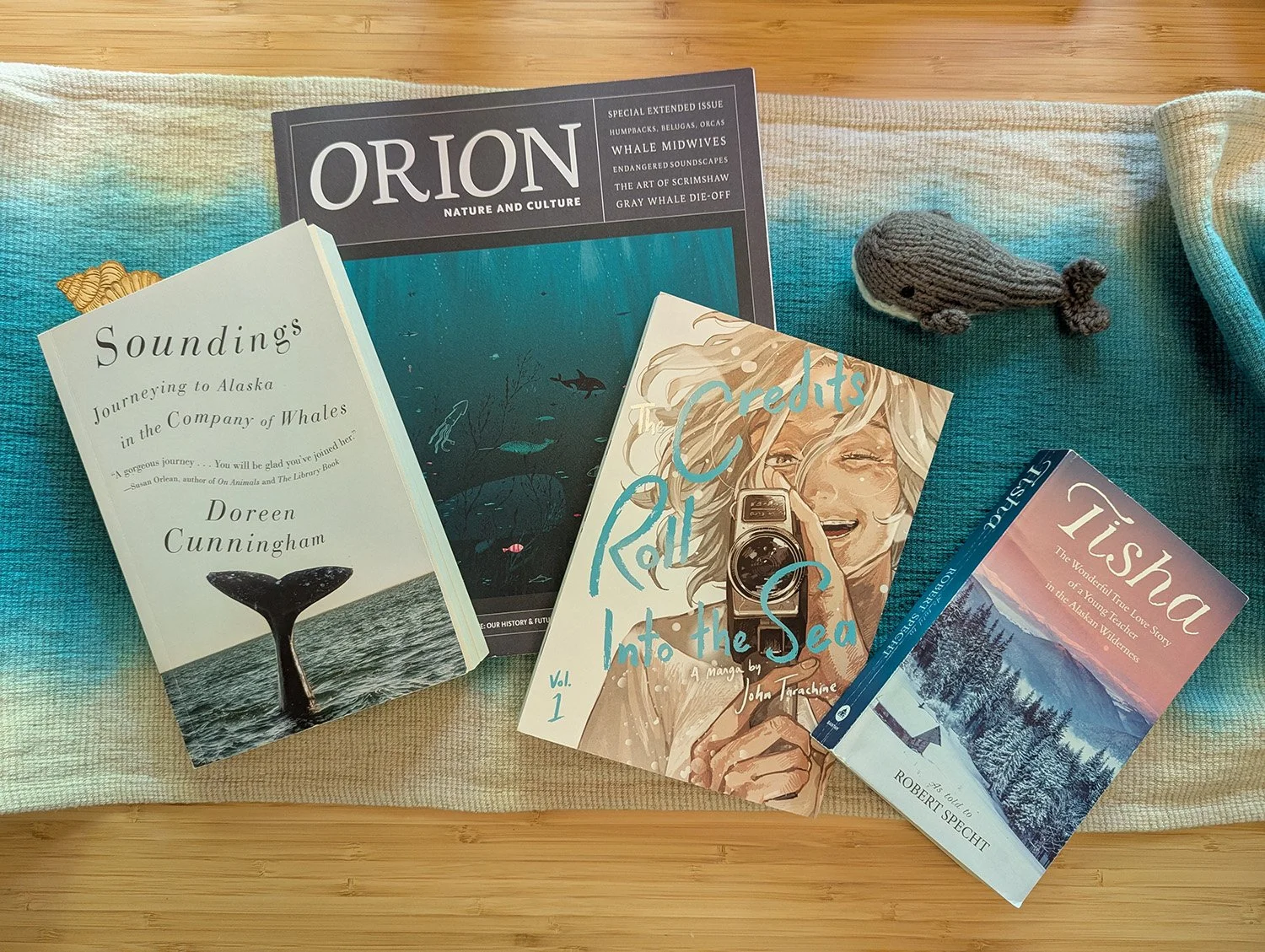
Our August book trio followed three women at different stages of their lives—Anne Hobbs heading to Chicken, Alaska to teach at nineteen, Doreen Cunningham following the whales’ migration with her young son, and Umiko Chino enrolling in film school at the age of 65. It fit, then, that I was also trying to read The New Perimenopause by Dr. Marie Claire Haver when I had time.
It’s been a weird summer, personally, though I bet most of us would say that for numerous and varied and not-so-varied reasons. I had a few health things that haven’t been the most fun, but at least I have a pathway to take since my generation actually has some real peri/menopause care. (“Apologies to our mothers”)
I feel weird about sharing that and I feel weird about this part of my life (after talking to similarly-aged friends, it’s clear I’m not the only one). I shouldn’t be embarrassed, but I also live in a nation where it seems like the only thing it’s really dignified to need is a tax break. I know you’re not shocked that I have Ologies episodes to recommend. :) You can find all three Emmenology (Perimenopause & Menopause) episodes here. The last episode has advice for loved ones.
So the poem was first inspired by personal experience and reading Soundings by Doreen Cunningham, then later, whale facts I learned in the Summer 2026 issue of Orion magazine, which was all about whales (and also had several woman-centric pieces). Not all whales experience menopause, but some toothed whales do, and that includes beluga whales and orcas (which actually belong to Delphinidae, the oceanic dolphin family, but due to their teeth they also fit in the suborder of toothed whales, Odontoceti). From Orion, I learned that whales are changing how they communicate in order to be heard in noisy (courtesy of us) waters (“their adaptable communication”). Both Soundings and Orion mention Tahlequah, the orca mother who carried her calves for days after their deaths (“their capacity for love”). I additionally wanted to squeeze in, but couldn’t find the chance, how cooperative whales can be, which brings me to our next bit…
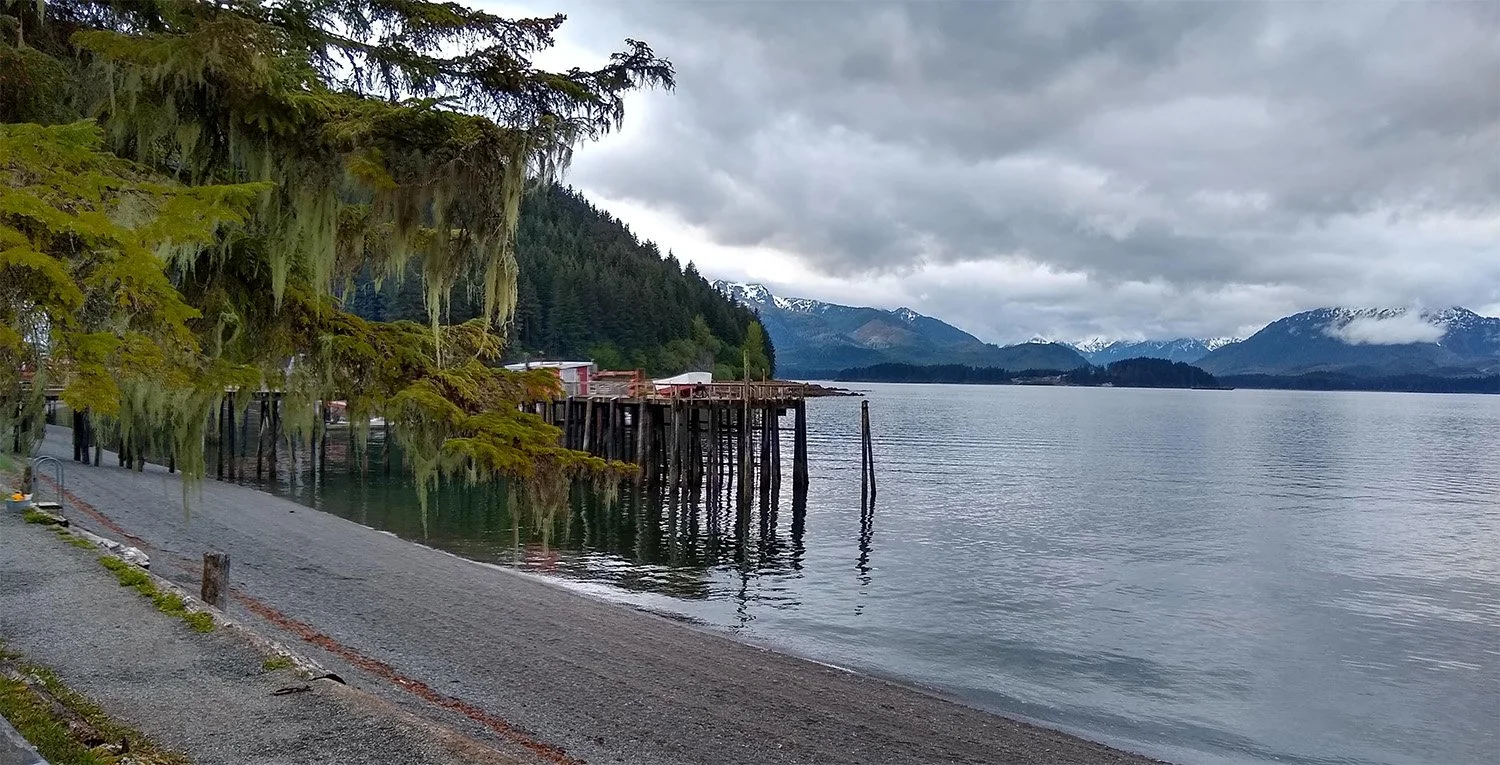
Lichen hanging from tree in Icy Strait Point, Alaska
Relying on Each Other
Conflict Avoidance vs. Speaking Up
Sometimes a book just carries you along, so much so that it gives you the illusion that it flowed out of the author, exactly like that, the first time they sat down to write. Soundings: Journeying to Alaska in the Company of Whales felt like that for me. Doreen Cunningham gently, purposefully, weaves whales, motherhood, history, climate change, and her experiences in Alaska together.
Tisha: The Wonderful True Love Story of a Young Teacher in the Alaskan Wilderness is also a memoir, but it reads like an adventure novel. It, too, feels like a book that simply flowed from the author, though it was written by Robert Specht, as told to him by Anne Hobbs. (If I recall correctly, he takes some liberty with geography and timing to keep the story streamlined.)
Both memoirs are predominantly set in Alaska—Alaska of 1927 and Alaska of the early 2000s—and both emphasize the need for cooperation in a place that can easily kill us. In Tisha, Anne Hobbs has to choose between following her heart or playing by racist rules to keep the peace in a place where not everyone sees each other as equal, yet they recognize they might need to rely on the people they consider beneath them to survive. In Soundings, Cunningham is told on her journalism sabbatical in Alaska that she must stop “quizzing people” and explains to us that “An Inupiaq word, paaqtaktautainniq, meant ‘avoidance of conflict.’ It was a deeply held value. Historically, lives depended on working well together to ensure survival. It was cooperate or die. People practiced tolerance and suppressed difficult emotions.” (179)
I was surprised to see more on this theme arrive in my inbox this month from “Letters from an American” by Heather Cox Richardson: “The biggest winners in the Klondike Fever were those from the newly booming city of Seattle who supplied the miners, and the writers who saw romance in the frigid dream: Jack London, whose most famous novel, The Call of the Wild, showed how love and loyalty trumped gold; and Robert Service, whose poems explored the cruelty of life in the Yukon but also the humor, sentimentality, and above all the loyalty and friendship of those who realized they must help each other or die.”(I recommend reading her post in full, as well as Service’s poem that she discusses, “The Cremation of Sam McGee,” which you can read here at the Poetry Foundation. )
Community and belonging seem to drive Cunningham to return to Alaska with her young son and away from a terrible time in her life. Yet for Anne Hobbs it’s a reversal, community tears her away from Fred Purdy, the half-Inuit man she loves: “I’d never loved anybody as much in my entire life as I loved him and now he was going away from me for the stupidest reason in the whole world.” (248)
Unfortunately in 2026, this is still terribly relevant. When is the right time to say something? When do we refrain for the sake of maintaining a relationship, hoping things will improve? The question of survival, once distantly removed for many of us, is put directly before many people as climate-fueled disasters increase. For the rest of us, it inches closer. Can you rely on your neighbors in the most dire of circumstances? Can they rely on you? I think the answer is yes. Maybe the real question for us these days is—is a billionaire anyone’s neighbor?
I highly recommend both Soundings and Tisha, and Soundings will be joining Tisha on my Rereads for a Rainy Day shelf.
Do you have a favorite type of whale? What did you enjoy about Soundings and/or Tisha?
Leave Space for Your Dreams
In The Credits Roll Into Sea, Vol. 1, John Tarachine notes that he put all his dreams of going back to film school on his protagonist Umiko Chino’s shoulders. (I love that we often get notes from the author at the end of a graphic novel, or sprinkled throughout if it’s a compilation of issues.) When we meet her, Umiko is a 65-year-old widow with a broken VCR, remembering the movies she watched with her husband. She goes to the movie theater for the first time in a long while and a young man named Kai (whose name, like Umiko’s, relates to the sea) is seated behind her. He recognizes something in Umiko that he understands about himself—they’re both meant to be making movies.
I enjoyed this graphic novel, though I don’t need a lot of motivation to pursue my creative dreams (it’s more like I need to remember to focus on just a couple, ha—this is the danger of “needing to” research so much as I write my novel, I find so many interesting things to explore). In addition to the wonderful art, I most appreciated the conversations between Umiko and Kai about creating things. It’s a lovely start to a series and I’m looking forward to the release of the second volume. We’re just getting the English translation here now, but the series was finished in 2025 and a movie adaptation premieres next year.
Have you found a creative hobby that you routinely enjoy? Are you a serial craft-dabbler? If you could set aside an hour this week or next weekend, what would you continue working on or try for the first time?
September Books
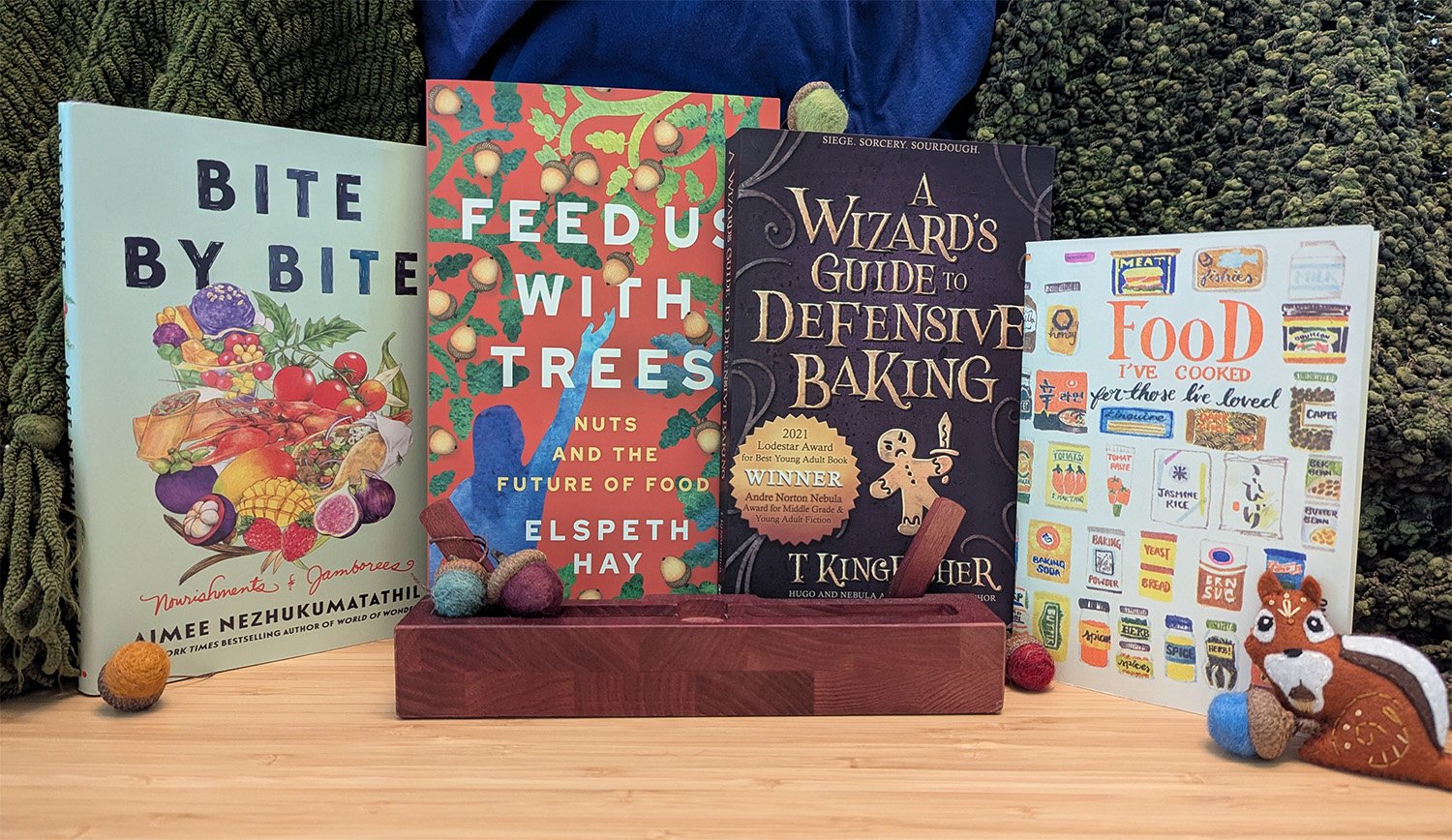
We’re setting the table with our first books of fall:
Feed Us with Trees: Nuts and the Future of Food
Elspeth Hay
Hay is the creator of Local Food Report, a radio program for CAI, the NPR station for the Cape, Coast & Islands, and in Feed Us with Trees, she offers an alternative to today’s intense industrial agriculture.
A Wizard’s Guide to Defensive Baking
T. Kingfisher
I’ve heard good things about T. Kingfisher’s books, but this will be the first one I’ve read. It’s a YA novel about a young wizard girl who works magic with dough. I might have to enjoy this one with my annual apple cider donut from Appleberry Farm. Dang it, I just made myself hungry. BRB!
Bite by Bite
Aimee Nezhukumatathil
Speaking of food traditions, these illustrated essays are all about Nezhukumatathil’s connections with food. I have a feeling they will unearth some of our own sweet and savory memories.
Food I’ve Cooked for Those I’ve Loved (zine)
Christina Hu
You can find this zine at the link above, or if you’re in the Twin Cities, you can swing by Open Book (where I was immediately drawn to “Food I’ve Cooked” in the zine display). Hu tells us, “This one is a little personal, maybe too personal now that I'm not just selling this to my friends and coworkers through word of mouth, but I love to overshare (see the rest of my zines for evidence).”
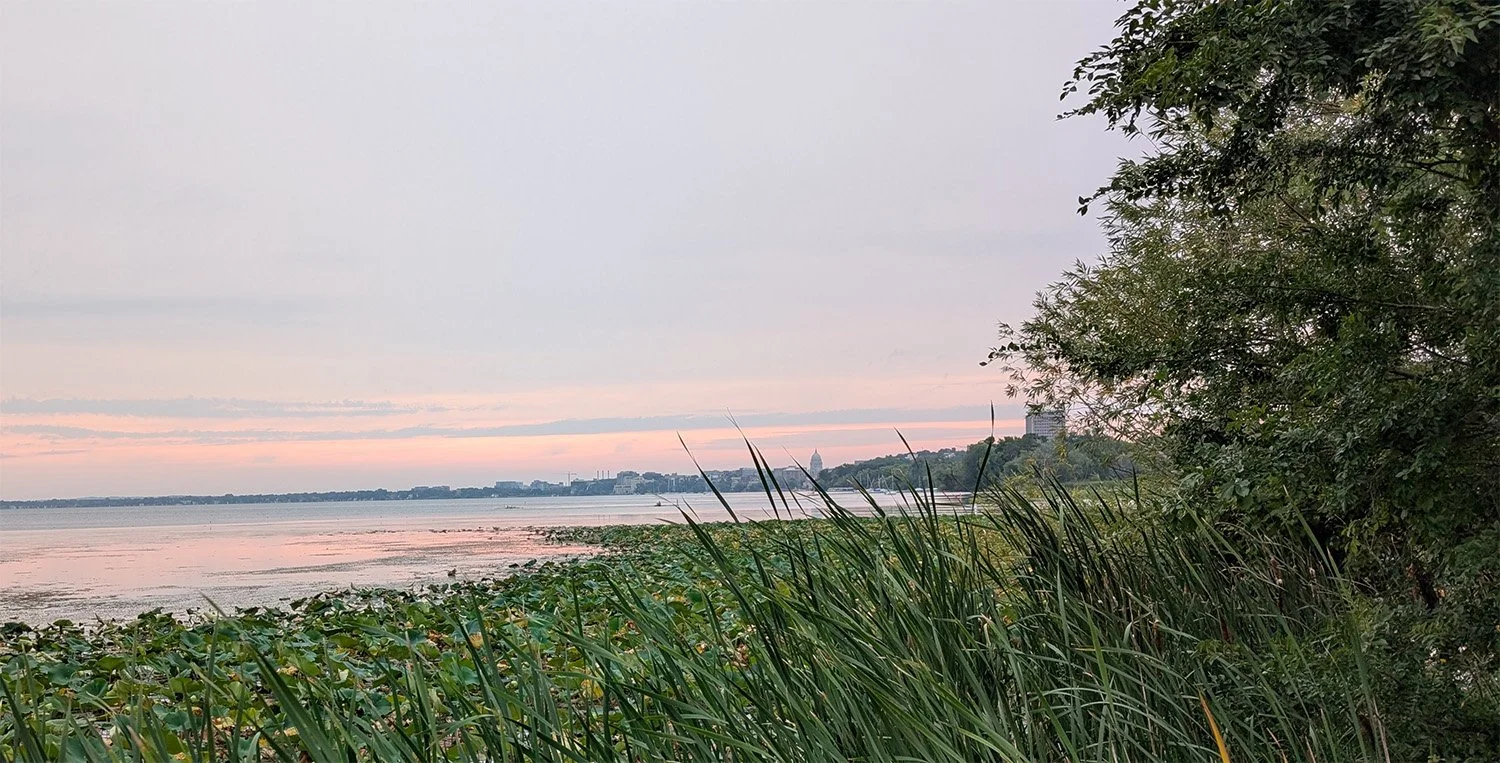
Lucas took this shot while out on a marathon training run
Three Hopeful Things
1. Paper Magazines & Attention Spans
The Orion issue was an impulse purchase in the checkout aisle of a co-op and I wouldn’t have done it if it weren’t for the whales, but I’m glad I did. Sometimes it’s hard to pick up a book—it can feel like too much when things are really busy—and that’s when I find myself turning to my phone or the TV. As it happens, a magazine was a nice in-between of short-form writing that held my focus.
Honestly, being on the phone, even to read an e-book, it’s easy to “check in” on this or that app, never quite committing to one thing start to finish. Not only is it easier to hone my attention on the singular endeavor of reading an article, but it’s easier to finish said article on paper because I can see where it ends, no need to keep poking at the right side of the screen to prompt the scroll bar to show.
So last night I picked up Issue 025 of Oh, Reader, a magazine for bookworms, which made for cozy bedtime perusal (and three book recommendations added to my TBR) and admittedly a little horrifying (and yet gratifying) daytime reading with Atar Hadari’s article, “The Body of Fritz Leiber,” about The Silver Eggheads, a portentous scifi novel from 1961 (this issue would be worth it for this article alone). For both magazines I thought, “I bet so-and-so would enjoy this and so would ____,” so now I have the added bonus of sharing.
2. We may say goodbye, but we’re still connected
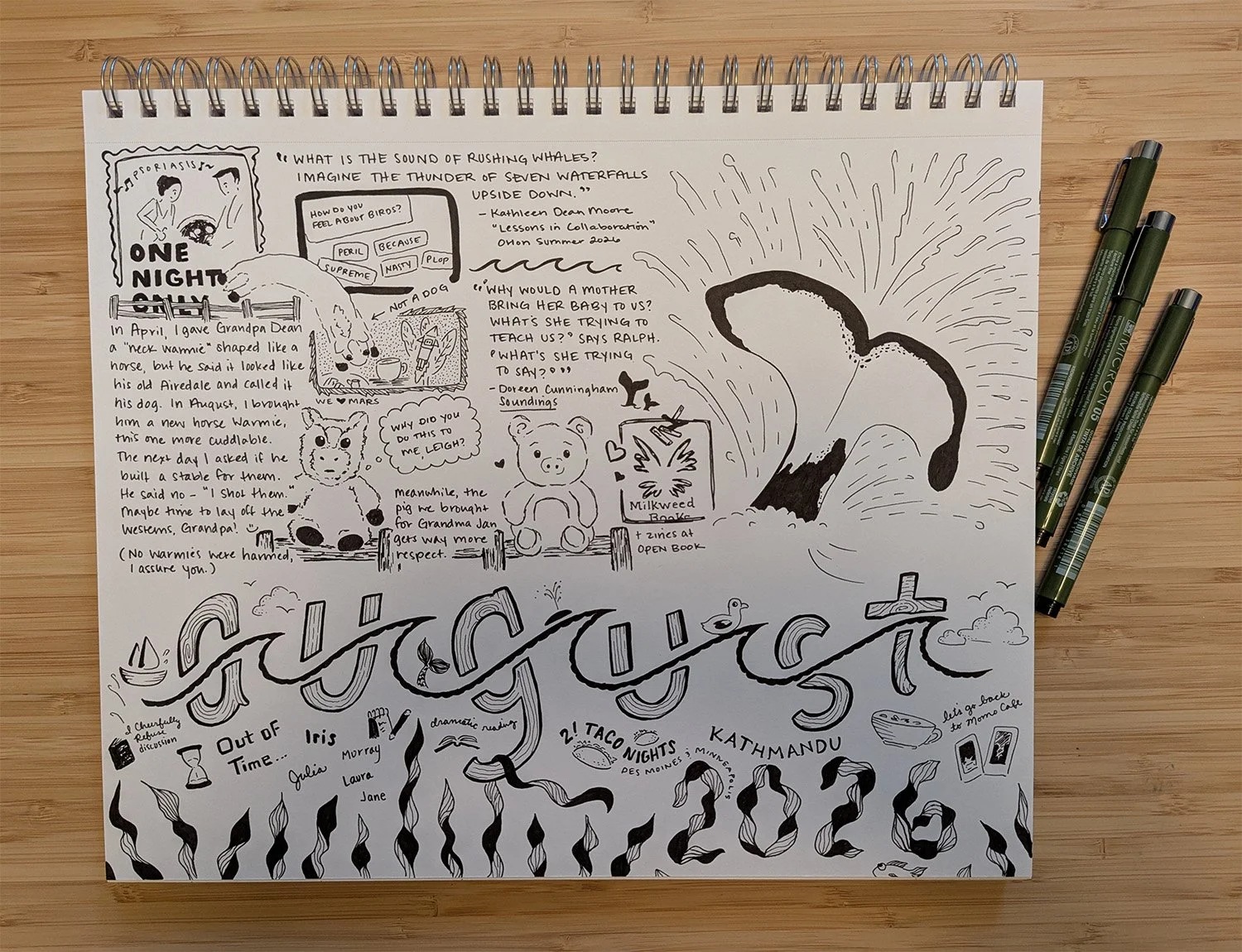
I was recently lucky to get to spend a week split between visiting family and the very first in-person retreat for my online writing group. Especially during busy summers, it’s easy to forget the specifics of your visit as soon as you leave. “Wait, what was that funny thing they said again?” “Did I give everyone a hug?” “I forgot to ask about something, but what was the something?” I used to wish I took at least half an hour before bed to journal everything, but that isn’t really practical. Sometimes I can save a quote or two and get a picture taken, and now I have my attempt at a big monthly doodle to capture some of those memories. Revisiting those artifacts can be such a treat later, but even if they don’t exist, the feeling remains. We’re still connected by the happiness we shared in each other’s company, whether it was last week or thirty years ago over a game of checkers, a peeled banana, or a cookie paired with a scoop of butter brickle ice cream...
3. A Pollinator Ball
The bumblebees and other pollinators were so prevalent the other day, flying gracefully from flower to flower and never bumping into one another. It was like they were performing a choreographed dance—Lucas called the scene before us a “pollinator ball.” I could almost hear the music. I hope that as the seasons change, you’ll find a little natural magic too.

Credits
All doodles and photos by Leigh Anne Gray or Lucas Gray.
Reference photo for first doodle: trestletech. Reference photo for second doodle: Madlyn.
The reviews are based on the following books: the 2022 paperback edition of Soundings: Journeying to Alaska in the Company of Whales by Doreen Cunningham, published by Scribner, an imprint of Simon & Schuster, Inc.; the 2018 mass market paper edition of Tisha: The Wonderful True Love Story of a Young Teacher in the Alaskan Wilderness as told to Robert Specht, published by Bantam Books, an imprint of Random House, a division of Penguin Random House LLC; the 2026 English language edition of The Credits Roll Into the Sea by John Tarachine, published by Dark Horse Manga, a division of Dark Horse Comics LLC.
Accoutrements
Seashell Bookmark by The Bookish Den | Amigurumi Whale from CKWonderlandbyHyoEun | Felted Wool Acorns by StoneHouseCrafts | Chipmunk by SetApartCreation